PVD coating jewelry does not have a single fixed wholesale price. Even when two pieces look identical on camera, factory quotes can differ by 20% to 60%. This price gap often confuses buyers who are searching for reliable suppliers. Understanding these differences is essential for making smart sourcing decisions.
The actual cost of PVD jewelry involves more than just the coating process itself. Factory pricing depends on several connected factors. These include the base material, jewelry design, surface preparation, coating thickness, order volume, and quality control standards. Each step directly impacts durability and final production costs.
This article breaks down the true costs of PVD-coated jewelry from a manufacturing perspective. You will learn what drives wholesale pricing, how to avoid hidden quality risks, and how to evaluate supplier quotations with confidence.

Why Does PVD Coating Jewelry Pricing Vary So Much?
Imagine comparing two gold PVD stainless steel rings from different manufacturers. They look identical on screen, yet one factory offers a quote of $2.50 while another asks for $6.00. This noticeable price gap leaves many jewelry buyers wondering why supplier pricing varies so drastically.
The difference in cost rarely comes down to simple profit margins. Instead, it reflects real variations in total manufacturing standards. PVD coating is only one part of a multi-step production pipeline. Elements like metal purity, surface polishing, vacuum chamber run times, and quality testing heavily influence the actual cost of making each piece.
To understand where your money goes, consider how a PVD coating jewelry supplier builds a wholesale quotation. The base cost begins with raw materials, such as standard 304 stainless steel versus premium 316L medical-grade steel. Next, workers spend time prepping the metal through precision stamping and multi-stage hand polishing. Once the surface is flawless, the item enters a vacuum chamber for PVD deposition. Finally, the factory conducts salt spray testing and careful packaging before shipment.
A low quote often means a supplier cut corners during surface prep or reduced chamber deposition time. Understanding this cost breakdown allows buyers to look beyond the initial quote and evaluate true product value before placing large production orders.
Below, we will examine each key cost driver step by step.
The Biggest Factors That Affect PVD Coating Jewelry Cost
Calculating the final quote for wholesale PVD jewelry requires looking at every phase of manufacturing. PVD vacuum deposition is only the final aesthetic step. The choices you make regarding raw materials, structural design, cleaning processes, and order sizes heavily influence your final per-unit price.
Base Material
The metal beneath the coating sets the baseline cost for raw materials and machining. Stainless steel remains the standard for durable PVD jewelry. However, medical-grade 316L stainless steel costs more than standard 304 steel because it contains molybdenum, which offers higher corrosion resistance.
Brass is easier to stamp and mold, making it cheaper initially, but it requires extra protective barrier plating before PVD deposition to prevent chemical reactions. Titanium offers superior strength and lightweight comfort, but its toughness increases CNC machining tool wear, driving up total production costs.
Jewelry Design Complexity
Simple shapes with flat surfaces are fast to produce and easy to polish. As jewelry design becomes more complex, manufacturing costs rise sharply.
For example, a smooth band ring requires minimal machining and quick hand polishing. A signet ring demands detailed CNC cutting to achieve sharp geometric lines. Adding stone settings requires skilled jewelers to set each gem securely by hand. Complex multi-part pendants need separate casting, individual polishing, and manual assembly before going into the coating chamber. Each added step increases labor time and machine usage.
Surface Preparation Before PVD
Many jewelry buyers assume that PVD coating covers surface imperfections, but the vacuum process actually magnifies every micro-scratch. Proper surface preparation is essential for a flawless finish.
Before coating, pieces undergo heavy grinding, multi-stage hand polishing, and intense cleaning. Grease, polishing compounds, and dust must be completely removed. In professional manufacturing practice, factories use automated ultrasonic cleaning tanks with multi-stage degreasing solutions. If a factory skips thorough cleaning, the titanium coating will fail to bond with the metal base, leading to early peeling. Investing in thorough surface cleaning protects long-term durability, even if it adds to initial preparation costs.
PVD Coating Specifications
Coating specifications directly control both production expenses and product lifespan. A standard decorative PVD layer measures around 0.03 to 0.05 microns, which works well for low-wear items like earrings. Daily-wear items like rings and bracelets require a functional coating thickness of 0.1 to 0.2 microns or higher.
Thicker coatings require longer holding times inside the vacuum chamber, consuming more electricity, target material, and machine time. Standard colors like 18K yellow gold or rose gold use common titanium targets. Custom shades like dark black, rainbow, or deep blue require specialized metal targets and precise gas ratios, which raises batch costs.
Order Quantity
Production scale heavily influences unit pricing in PVD manufacturing. Vacuum coating chambers run on batch loads. Whether a chamber holds 500 rings or 5,000 rings, the energy, target consumption, and technician setup costs for that run remain nearly identical.
Small order quantities mean fixed chamber costs are divided among fewer pieces, resulting in a higher price per unit. Larger production runs maximize chamber space, dramatically lowering the cost per piece. Higher order volumes also allow factories to optimize material purchasing and streamline polishing lines.
| Cost Factor | Impact on Pricing | Why It Matters |
| Base Material | High | Material prices and machining hardness vary significantly. |
| Design Complexity | High | Complex shapes require extra CNC time, setting, and polishing. |
| Surface Preparation | Medium | Determines final surface shine and coating adhesion. |
| Coating Thickness | Medium to High | Thicker layers use more chamber time and target material. |
| Order Quantity | High | Larger batch sizes split fixed chamber run costs efficiently. |
【Manufacturer Insight】: Many buyers treat PVD as a simple surface paint job. In real factory operations, surface preparation often costs more time and labor than the coating process itself. A perfectly cleaned and polished base guarantees a rich, long-lasting bond that never peels.
How Different Jewelry Types Influence PVD Coating Costs
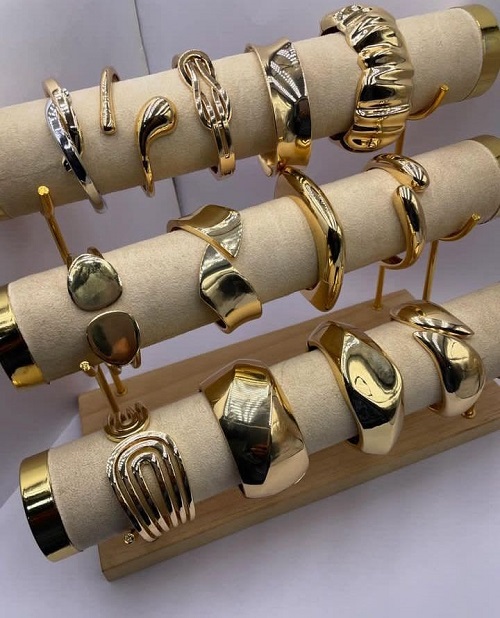
Two jewelry items made from the same stainless steel grade often carry very different PVD coating price tags. A simple ring band and a complex multi-link bracelet require vastly different production setups. Understanding how physical shape affects factory handling helps explain these price differences.
The variation in cost stems from total surface area, geometric complexity, hand-polishing time, and chamber loading capacity.
| Jewelry Type | Cost Level | Primary Cost Driver |
| Rings | Lower | Simple geometry, compact chamber placement |
| Earrings | Medium | Pair color consistency, meticulous jigging |
| Necklaces | Medium | Chain link movement, surface cleaning |
| Bracelets | Higher | Large polishing surface, multi-segment assembly |
| Pendants | Medium to High | Complex crevices, detailed manual finishing |
Intricate designs do not always consume more raw metal, but they consistently require more manual labor. For example, a wide cuff bracelet features a large surface area that demands extensive multi-stage hand polishing to achieve a mirror finish before PVD treatment. Any missed spot on that large surface becomes immediately visible once gold deposition occurs.
Earrings and pendants often feature recessed grooves, sharp angles, or hollowed backs. These detailed features block light and mechanical polishing wheels. Craftspeople must polish these tight spaces by hand.
Furthermore, item shape dictates how many pieces fit inside a PVD vacuum chamber during a single run. Flat or thin rings stack tightly on specialized hanging jigs, maximizing chamber yield. Curved bracelets or dangling pendants require more physical clearance to prevent overlapping shadows during ion sputtering. Lower chamber density means fewer units share the fixed run cost, which increases the price per piece.
Working with an experienced manufacturer ensures your product design is optimized for efficient chamber loading without compromising aesthetic details.
How PVD Quality Affects Wholesale Pricing
Premium PVD coating costs more because superior durability requires control over multiple manufacturing steps. Higher quotes reflect structural reliability rather than higher factory profit margins.
Multi-Stage Surface Preparation
Creating a flawless base finish requires intensive hand polishing and multi-stage ultrasonic degreasing. Removing fine compound residues ensures the titanium layer bonds directly with the metal surface, preventing premature peeling.
High Equipment Standards and Process Stability
Advanced PVD machines maintain ultra-clean vacuum environments and steady temperature controls. Stable deposition cycles yield dense atomic layers, providing superior resistance to daily friction and moisture exposure.
Strict Color Consistency Across Batches
Matching precise metal shades like 18K yellow gold, rose gold, or deep black across high-volume orders demands precise gas metering and target purity. Leading factories monitor gas mixtures continuously to ensure batch-to-batch uniformity.
Rigorous Testing Protocols
High-tier suppliers subject production samples to artificial sweat exposure, salt spray testing, and wear resistance trials. Comprehensive quality inspections guarantee that every batch meets international durability standards before leaving the facility.
Typical Wholesale Price Ranges for PVD Coated Jewelry
Wholesale pricing for PVD jewelry varies depending on order scale and technical specifications. Having clear benchmark pricing helps buyers budget effectively when sourcing products from overseas manufacturers.
The table below outlines standard wholesale price ranges based on typical medium-to-large production runs:
| Product Category | Typical Wholesale Price (USD) | Primary Cost Factors |
| Basic PVD Rings | $1.50 – $3.50 | Simple geometry, minimal hand polishing |
| Standard Necklaces | $3.00 – $6.50 | Chain assembly, link surface prep |
| Bracelets & Cuffs | $4.50 – $9.00 | Large polishing area, rigid structure |
| Stone-set PVD Jewelry | $5.00 – $12.00 | Hand setting labor, stone quality |
| Complex Custom Pieces | $8.00 – $20.00+ | Multi-part assembly, custom PVD targets |
Factory quotations depend on accurate product information. To receive an exact quote and speed up the sourcing process, prepare the following details before reaching out to suppliers:
- Product CAD Drawings or Tech Packs: Clear dimensions, thickness, and tolerances.
- Exact Base Material Grade: Specific metal types such as 316L stainless steel or brass.
- Target Coating Specifications: Layer thickness (e.g., 0.1 microns) and color shades (e.g., 18K yellow gold).
- Order Volume per Design: Total batch size and quantity split across different colorways.
- Custom Packaging and QC Standards: Special pouch requirements or salt spray testing needs.
Providing detailed specifications allows manufacturers like S&J Jewellery to offer accurate per-unit pricing while optimizing chamber loads for your production budget.
How Buyers Can Reduce PVD Jewelry Costs Without Sacrificing Quality
Lowering manufacturing costs does not mean compromising on metal durability or accepting thin, low-grade coatings. True cost reduction comes from eliminating operational inefficiencies and reducing machine setup frequency during production. Smart buyers optimize their order planning to get maximum value from factory runs.
Here are practical strategies to lower your per-unit PVD jewelry costs:
- Use Existing Molds Whenever Possible: Custom mold creation adds upfront tool tooling costs and delays timelines. Choosing standard designs or slightly modifying existing factory molds saves significant engineering fees.
- Consolidate Multiple Products Into One Production Run: Vacuum coating runs on batch chamber space. Combining different SKUs that share the same color shade in a single batch optimizes chamber capacity and lowers individual run costs.
- Standardize Colors Across Collections: Frequent color changes force technicians to purge vacuum chambers and recalibrate gas settings. Sticking to standard 18K yellow gold or rose gold across your line speeds up manufacturing.
- Increase Order Quantities for Core Products: Increasing order volumes on best-selling items allows suppliers to buy raw materials in bulk and streamline assembly lines.
- Finalize Designs Before Sampling: Altering CAD files or structural details late in the process wastes materials and adds rework expenses.
[Manufacturer Insight]: Reducing production costs rarely requires cutting corners on material quality. Cost savings come from helping the factory run larger, uninterrupted coating batches without frequent setup changes.
What Should Buyers Compare When Reviewing Supplier Quotations?
When reviewing wholesale quotes for PVD jewelry, selecting the lowest unit price can be a costly mistake. Unusually cheap quotes often conceal hidden compromises, such as skipped cleaning steps, thinner target deposition, or lower-grade stainless steel. Evaluating quotes requires comparing total manufacturing value rather than just the bottom line.
A thorough quotation review must compare the exact engineering specifications behind the numbers:
| Quotation Feature | Budget Supplier Quote | Premium Supplier Quote | Why the Difference Matters |
| Base Metal Grade | Recycled 304 Stainless Steel | Virgin Medical-Grade 316L | 316L provides superior corrosion resistance and prevents skin reactions. |
| Surface Prep | Basic automated wash | Multi-stage ultrasonic degreasing | Deep cleaning ensures long-term coating adhesion and prevents peeling. |
| PVD Thickness | 0.02 – 0.03 microns | 0.10 – 0.20+ microns | Thicker layers resist daily friction and maintain color stability much longer. |
| Testing Standards | Visual check only | Artificial sweat & salt spray testing | Lab testing verifies structural durability before mass shipping. |
| Defect Rate QC | Batch spot checking | 100% piece-by-piece inspection | Comprehensive QC guarantees every piece meets retail standards. |
Working with transparent partners like S&J Jewellery ensures you receive itemized quotations that detail base metals, deposition thickness, and testing protocols. True value lies in receiving durable, retail-ready jewelry that protects your brand reputation.
Key Takeaways on PVD Coating Jewelry Costs
Understanding wholesale pricing for PVD coating jewelry requires evaluating every step of the manufacturing chain. Unit costs depend on your chosen base metal, structural complexity, surface prep, layer thickness, and batch size. While chasing the lowest initial quote is tempting, cheap production often leads to early fading, poor coating adhesion, and costly customer returns.
True value comes from choosing a transparent manufacturing partner who balances cost efficiency with strict quality standards. Optimizing order volumes, standardizing color choices, and finalizing CAD designs early allow you to lower unit expenses without compromising durability.
When sourcing premium stainless steel jewelry, partnering with an experienced OEM/ODM provider is essential. S&J Jewellery operates a dedicated, environmentally compliant electroplating facility backed by over a decade of precision craftsmanship. With 100% quality inspection protocols, flexible MOQ options, and expert chamber loading optimizations, S&J helps global brands deliver hypoallergenic, waterproof, and long-lasting jewelry collections.
Ready to streamline your production and get an itemized wholesale quote? Contact the engineering team at S&J Jewellery today to transform your product ideas into high-margin retail realities.

Samuel Li
As Co-founder of S&J Jewellery(Est 2010), I oversee business development, sales, and production. I've successfully managed over 1,000 custom jewelry projects for global brands. My expertise in jewelry manufacturing solutions, combined with strong communication and market insights, has earned lasting trust from international partners. I ensure every project reflects precision and reliability.